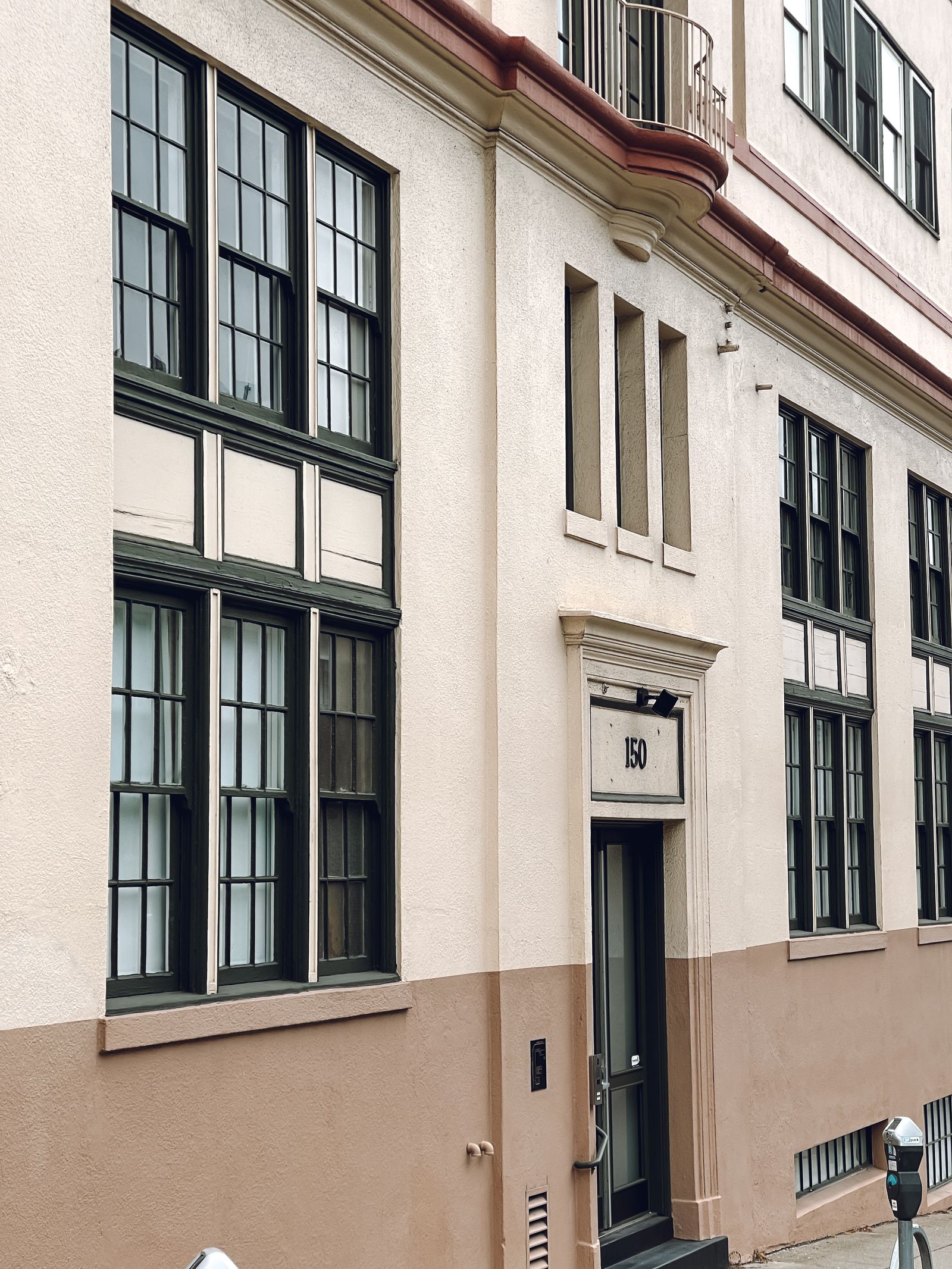
Soft washing and pressure washing solve different problems
Soft washing generally pairs compatible cleaning chemistry with controlled dwell time and a lower-pressure rinse suited to the surface. It can be useful for algae-like staining, mildew-like growth, pollen, bird residue, light organic film, and some atmospheric soil after evaluation. The objective is to let the chemistry do appropriate work without using unnecessary force against the facade. Low pressure is not a complete safety claim, however. Chemistry, dwell, temperature, overspray, rinse volume, plant protection, glazing, metals, and runoff all matter.
Pressure washing uses mechanical force to detach soil from compatible surfaces. It may fit selected concrete, durable hardscape, service aprons, curbs, or localized deposits when pressure at the surface, distance, angle, nozzle, flow, and water movement are controlled. Excess force can etch concrete, erode mortar, remove paint, disturb sealants, mark EIFS, expose aggregate, or drive water behind panels and openings. A pressure number on an advertisement does not explain the operating process or whether it fits the building.
Match the method to Champaign materials and deposits
Brick and masonry call for attention to mortar condition, porosity, historic or patched areas, soot, efflorescence, and salt. Precast concrete may show traffic film, organic staining, repairs, or exposed aggregate. Glass may need separate treatment for mineral spotting, construction residue, or sealant marks. Painted metal can show oxidation or coating failure that cleaning reveals but cannot repair. EIFS, stucco, canopies, and tile have different limits from a durable loading slab. A downtown storefront should not receive one assumed setting just because a rear service wall can tolerate more force.
The same property may need several methods. An organic mark on shaded masonry may receive a soft-wash process, a concrete service area may receive controlled pressure, entry glass may need low-pressure detail, and bonded mineral scale may need specialty treatment. Winter salt is not the same as algae. Pollen is not the same as oxidation. A test area is useful when the stain, finish, or material response is uncertain. The proposal should identify the method by zone, expected improvement, remaining limitations, and excluded repair or restoration work.
- Ask which material receives chemistry, pressure, agitation, contact detail, or specialty treatment.
- Confirm protection for joints, coatings, glazing, signs, doors, air intakes, plants, and equipment.
- Separate cleaning from restoration, coating replacement, leak investigation, and masonry repair.
- Use a representative test area when the deposit or material response cannot be predicted from photos.
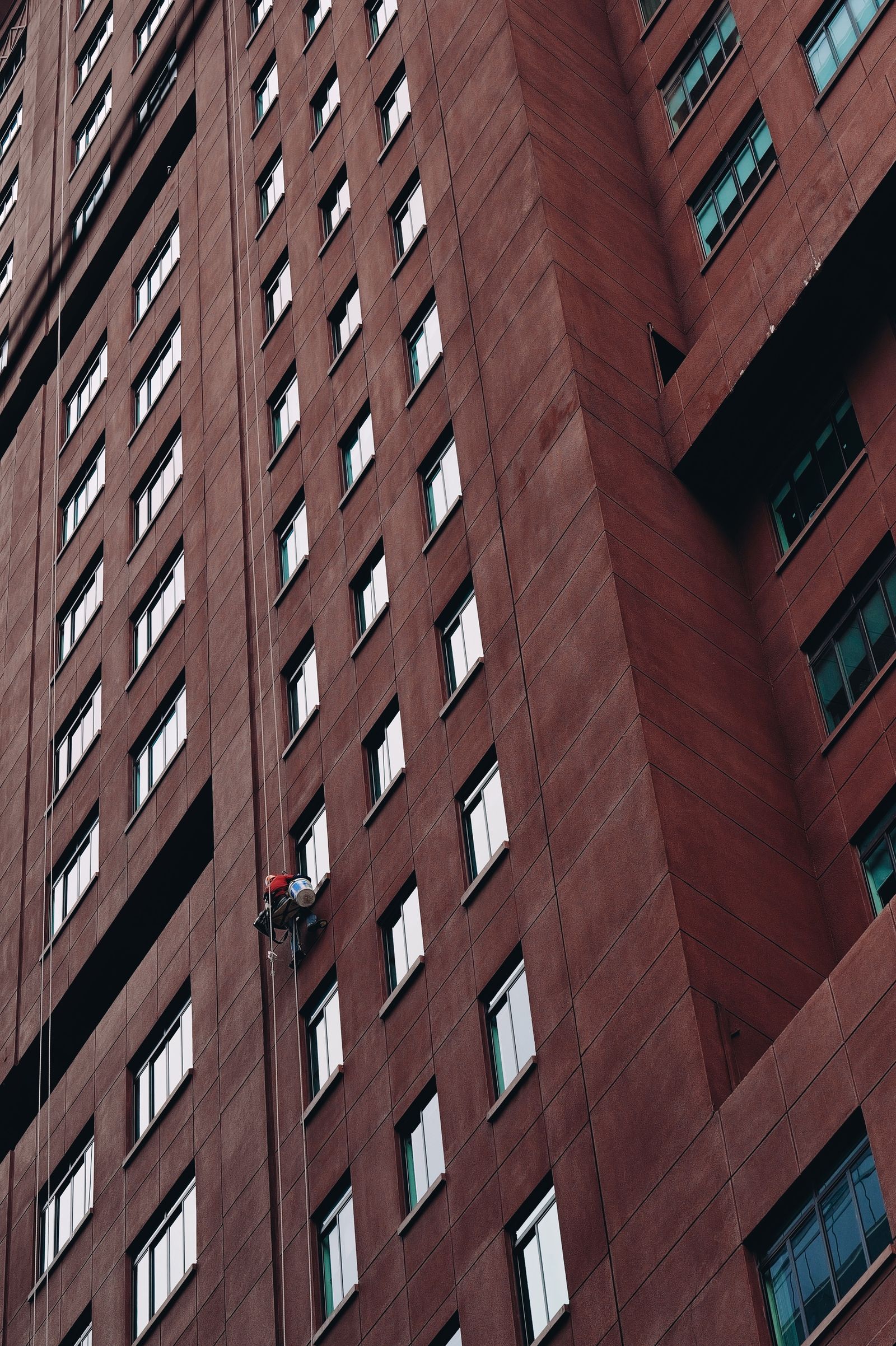
Let corridors and people influence the method map
Downtown and Neil Street properties may have limited staging, sidewalks close to storefronts, deliveries, outdoor seating, and people moving between businesses. Market Place retail work adds customers, carts, drive aisles, loading areas, signs, and neighboring tenant operations. A medical or office property along a busy corridor needs clear patient, visitor, employee, and accessible routes. Near the University of Illinois, regular student and service traffic can make a seemingly open wall active throughout the day; that context does not imply a university contract, and it does require a property-specific access plan.
Pressure can create more noise, overspray, water movement, and displaced debris, while soft washing can introduce chemistry, dwell time, mist, plant concerns, and a need to keep people away from the treated zone. Neither method is automatically easier on an occupied site. Compare entrances, air intakes, doors, vehicles, queues, public sidewalks, delivery windows, emergency access, and the stop signal for each proposal. A phased or pre-opening schedule can be more valuable than a faster machine.
Treat pollen, salt, freeze-thaw, and stormwater as decision factors
Central Illinois seasons can change the appearance and behavior of a commercial facade. Spring pollen can settle on ledges and canopies. Summer heat and humidity can alter dwell time and drying. Winter salt and brine can collect near parking, loading, and road-facing elevations. Freeze-thaw movement can enlarge failed joints, loosen material, and reveal leaks or spalling. More force does not make salt, efflorescence, oxidation, damaged coatings, or an active water source become an organic stain. The method should follow the deposit and the material, not the most dramatic pressure rating.
Both methods move water and removed soil. Champaign's flat areas, parking lots, curb inlets, planted beds, low doors, and neighboring tenant spaces should be mapped before work. The City of Champaign's stormwater guidance underscores the importance of runoff management, but a visible inlet is not automatic approval for discharge. Compare the proposed water source, expected flow, slope, drains, low points, landscaping, protection, diversion, collection, recovery, filtration, and disposal assumptions. Ask what happens if water travels differently than the sketch or if weather changes the work window.
A recurring streak can also be a building or site condition. A clogged gutter, overflowing downspout, parapet defect, failed sealant, irrigation spray, condensation, or roof-edge detail can keep one elevation wet. Cleaning may improve the appearance while the property team separately investigates the source with a roofer, mason, contractor, or envelope professional. A good comparison reports that condition instead of repeatedly treating the symptom.
Compare access, aerial limits, and the full operating plan
Access changes the method. Upper walls may require a lift, pole, roof access, hand work, or a hybrid plan. Downtown staging, overhead wires, trees, balconies, parking decks, active roads, and narrow sidewalks can limit equipment. Retail and medical sites may need barriers and spotters, while offices may require tenant notices and after-hours work. Drone assistance can be considered for suitable broad upper elevations only after reviewing wind, airspace, line of sight, launch and recovery space, stand-off distance, public separation, facade compatibility, and water controls. It does not replace close condition assessment, glass detail, repair work, or ground protection.
Ask every bidder to show a method map and answer the same practical questions: Which zones receive soft washing, pressure, contact work, or another treatment? What are the pressure, flow, chemistry, dwell, rinse, and test-area assumptions? How are entrances, patients, students, customers, employees, vehicles, plants, air intakes, signs, and drains protected? What weather stops work? What deposits may remain? What photos and source-condition notes are included at closeout? This makes the comparison about a usable result rather than a machine label.
Use the Champaign quote to make the choice specific
Send the address, building use, materials, approximate height, priority elevations, photos of representative stains, desired finish, operating hours, water access, drainage observations, and restrictions involving patients, guests, students, customers, tenants, employees, deliveries, events, parking, or security. Mention whether the goal is recurring maintenance, tenant turnover, an event-ready entrance, a medical arrival area, or a specific source investigation. A site review or test area may be appropriate before final pricing.
A useful proposal should state included elevations, method by zone, access, protection, weather limits, runoff assumptions, exclusions, expected improvement, closeout photos, and any source or repair condition that remains. To compare options for a Champaign property, call +1 239-351-2897 or email contact@dronebuildingcleaners.com. The conversation should help the facility team understand what will be cleaned, how the public area will remain controlled, and which conditions require another trade.